Why Is My Retaining Wall Leaning, and How Bad Is It?
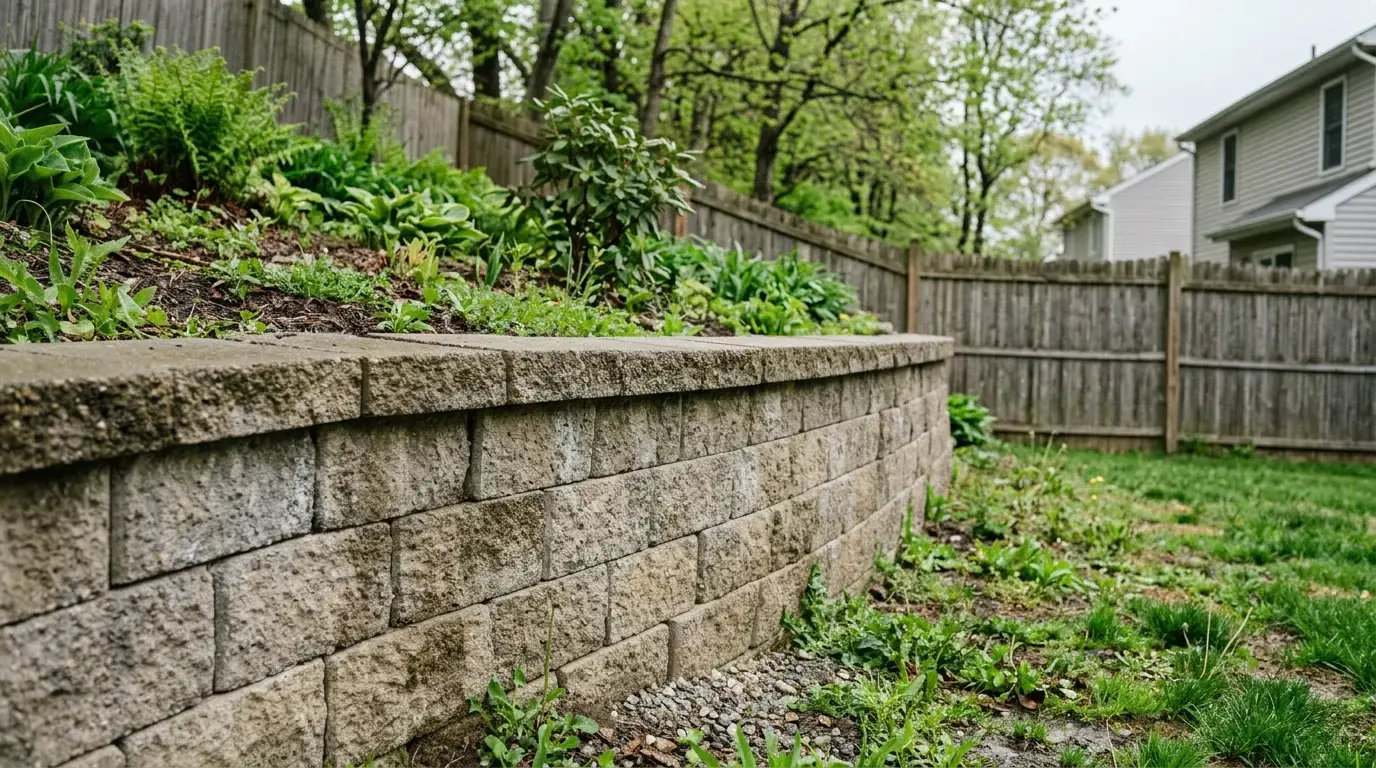
A leaning retaining wall in New Jersey usually isn’t a sudden failure. It’s a slow one that finally became visible — and the block is almost never the actual problem.
JC Landscaping Crew
·
Updated August 2026
·
7 min read
A leaning retaining wall in New Jersey usually isn’t a sudden failure. It’s a slow one that finally became visible. The wall held fine for years, then one spring you noticed the top course sitting an inch proud of the one below it, and now you can’t stop looking at it.
Here’s the part most homeowners don’t expect: the block is almost never the problem. What’s behind the block is. Retaining walls hold back soil, and soil holds water. When that water has nowhere to go, it builds pressure against the back of the wall every time it rains and every time the ground freezes and thaws. That pressure has to move something, and the wall is the only thing that can move.
This article covers what causes a wall to lean, how to read what you’re seeing, and how to tell whether you’re looking at a repair or a rebuild.
01
Water Is Almost Always the Reason
Behind every properly built retaining wall there’s a layer of clean drainage stone, a filter fabric keeping soil out of it, and an outlet where the water leaves. If any of those three are missing, water collects behind the wall instead of draining through it.
Drainage stone and filter fabric — the invisible half of a wall that lasts.
In New Jersey that matters more than it does in a dry climate, because the ground freezes. Water expands when it freezes, and it expands against whatever is holding it in. A wall built into Piedmont clay without drainage takes that push every single winter. Some walls survive it for fifteen years and some go in five, depending on how much water arrives and how well the base was compacted. Either way, the failure was designed in from the first course.
02
What Should Be Behind the Block
The visible wall is maybe a third of the actual structure. The first course should sit buried below grade on compacted stone, leveled carefully, because everything above follows that line. Behind the face there should be clean stone running the full height, wide enough to actually move water rather than a token few inches.
The visible wall is maybe a third of the actual structure. None of what makes it last shows in a photo — which is exactly why it gets skipped on cheap jobs.
Filter fabric separates that stone from the backfill soil so the stone doesn’t silt up and stop working. Backfill goes in and gets compacted in lifts instead of dumped and left. Taller walls add geogrid, which is fabric layered back into the soil to tie the whole mass together.
03
Leaning, Bulging, or Settling Mean Different Things
A wall that tips outward from the top usually has pressure behind it with a base that’s still holding. That’s often the most repairable version. A wall bulging from the middle is worse news, because it means the backfill behind that section has already moved and the wall is being pushed from inside the slope.
Leaning at Top
Pressure behind, base still holding. Most repairable version.
Bulging Middle
Backfill has moved. Slope is pushing from inside. Serious.
Dropped at End
Base problem, not pressure. Drainage work won’t fix it.
A wall that dropped at one end isn’t a pressure problem at all, it’s a base problem, and no amount of drainage work fixes it. Cracked or separated corners usually mean the two sections moved independently, which points at uneven settlement underneath.
Take photos of the wall from the same spot every few months. Movement that’s still progressing is a different conversation than movement that stopped years ago.
04
Repair or Rebuild?
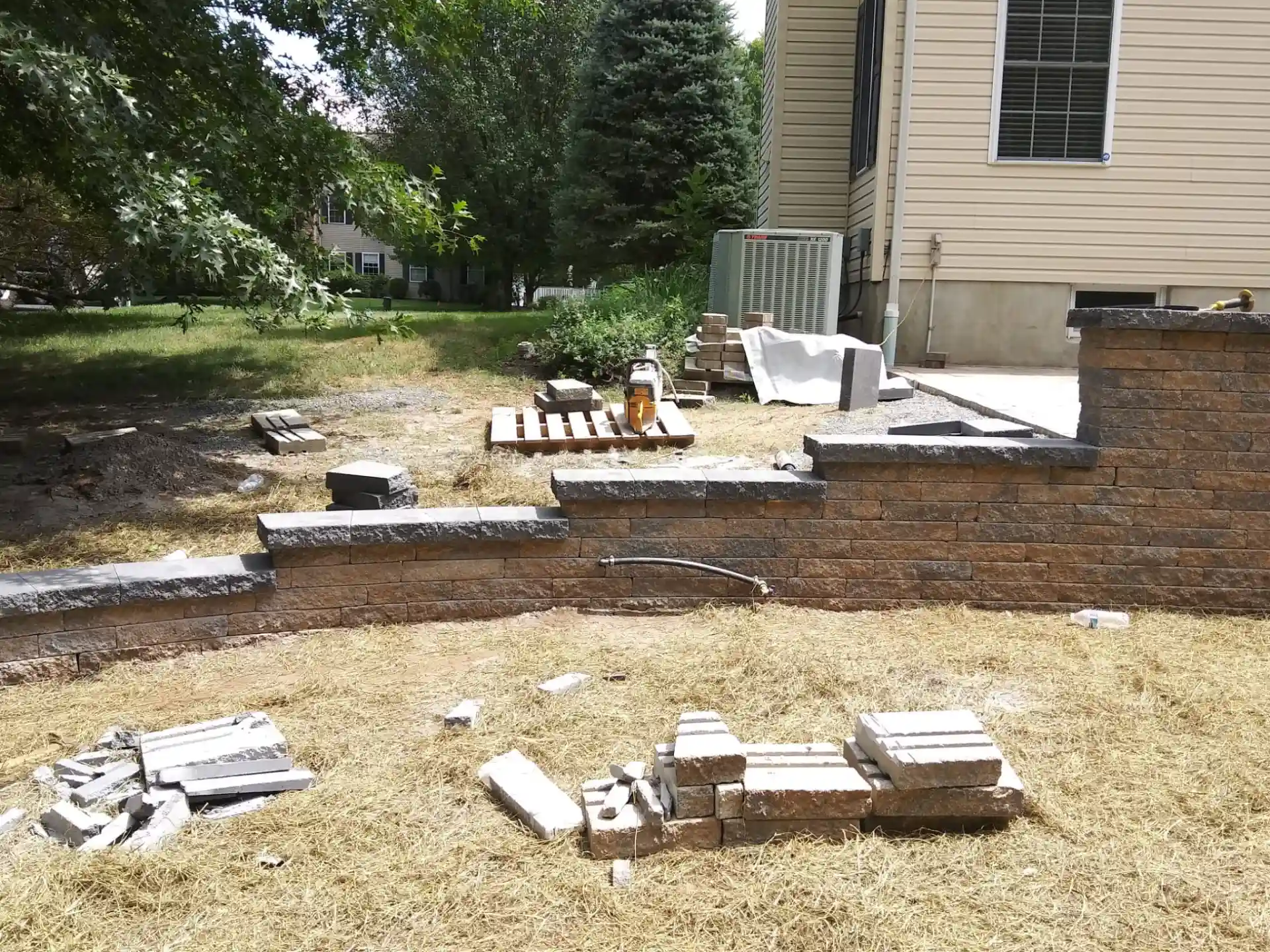
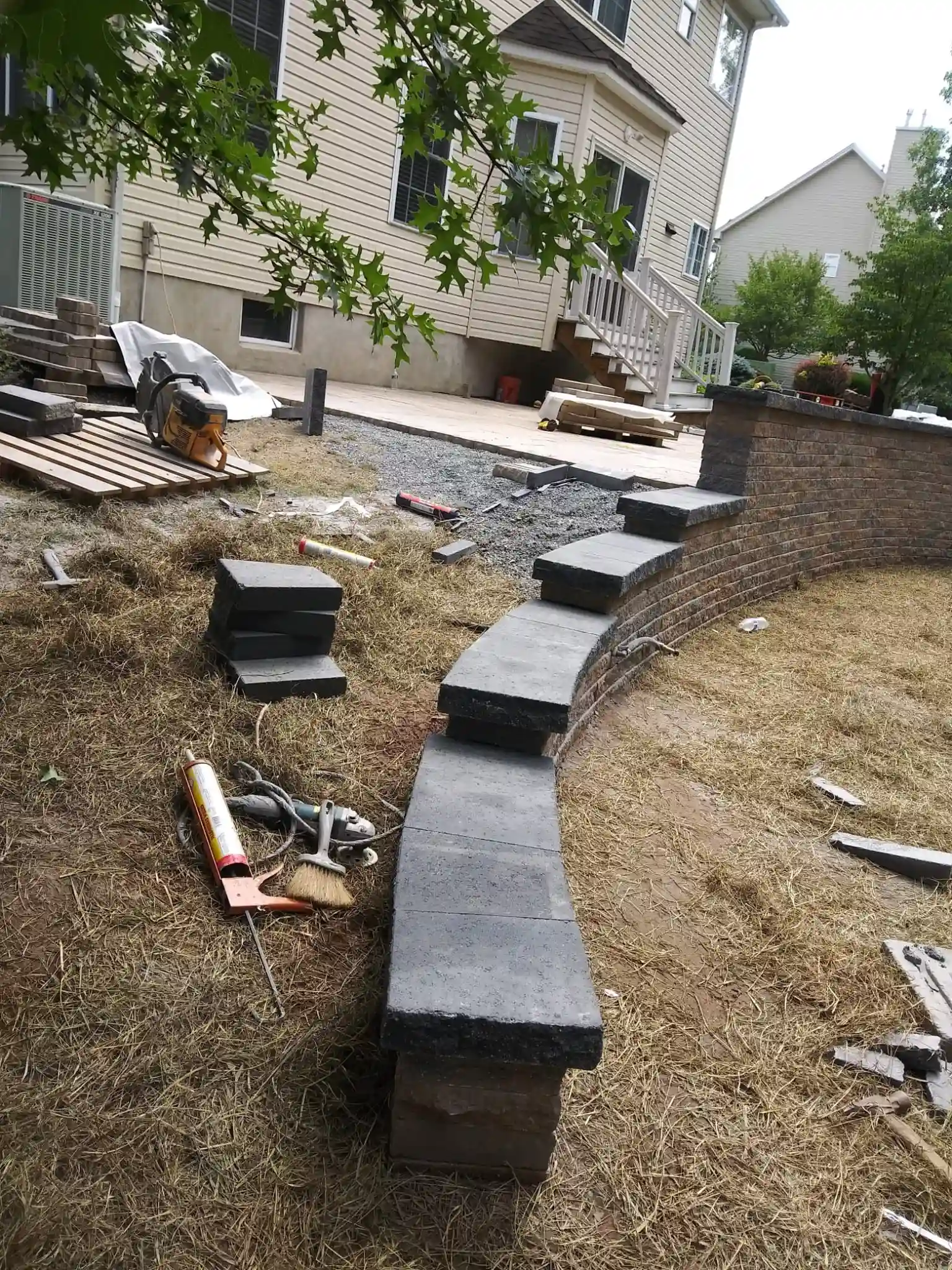
Resetting the top few courses of a leaning wall is real work and it’s sometimes the right call, particularly when the base is sound and the movement is limited to the upper portion. What it doesn’t do is add the drainage that was never there.
A rebuild is more work up front and less work over the next decade.
If the cause is still behind the wall, the same courses move again, usually within a couple of seasons. When a wall is bulging from the middle or the base has settled, rebuilding costs more once and less over the following decade than repairing it twice.
Any contractor who quotes a repair without excavating behind the wall to see what’s back there is guessing. Ask what they expect to find, and ask what happens to the price if they’re wrong.
It depends on the height and what it’s holding. A low garden wall leaning is a maintenance issue. A taller wall holding a driveway, a patio, or a neighbor’s grade is a safety concern and should get looked at soon rather than next season.
Can I just push the wall back into place?+
No. The soil behind it has already moved into the space the wall used to occupy. Pushing the block back means compressing that soil, which isn’t something you can do from the front of a wall.
How long should a retaining wall last in New Jersey?+
A properly drained block wall built on a compacted base should last decades. Most leaning retaining wall calls we get in New Jersey involve walls under twenty years old that never had drainage installed.
Does the type of block matter?+
Far less than people expect. Modern segmental block is strong enough for residential walls. Failures trace back to base, drainage, and backfill, not to the block itself.
Do I need a permit to rebuild my wall?+
Past a certain height, yes, and usually an engineered design with it. The trigger height is set by your township or borough in New Jersey, not by the contractor, so ask them before you commit to a design.
Free Estimate
Get your retaining wall estimate in New Jersey
Send a photo of the leaning wall and we will tell you what we are seeing. Free estimates, no obligation.