A sinking paver patio in New Jersey almost always tells you something about the base — not the pavers. Here’s what causes settling and what can be fixed.
JC Landscaping Crew
·
Updated August 2026
·
7 min read
A sinking paver patio in New Jersey almost always tells you something about the base rather than the pavers. Pavers themselves don’t fail. They’re solid concrete units that will outlast most of the house.
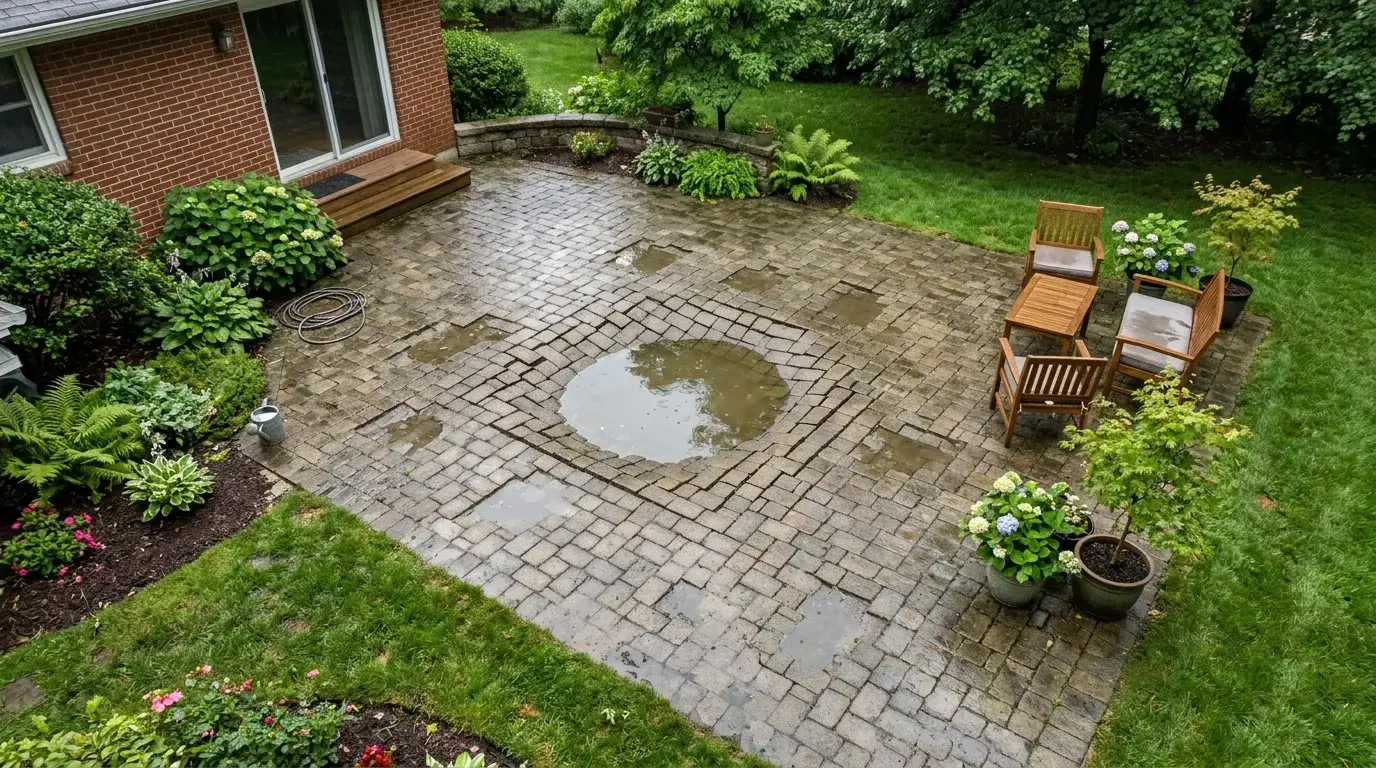
When one section of a patio drops half an inch below the rest, or a puddle appears after every rain where there never was one, the material under the pavers has moved. That happens for a handful of reasons, and they’re worth knowing before you call anyone, because the fix depends entirely on which one you’re dealing with.
This article walks through what causes a paver patio to sink, how freeze and thaw cycles accelerate it here, and whether the section can be reset or the whole patio needs to come up and go back down properly.
01
Settling Almost Always Starts With the Base
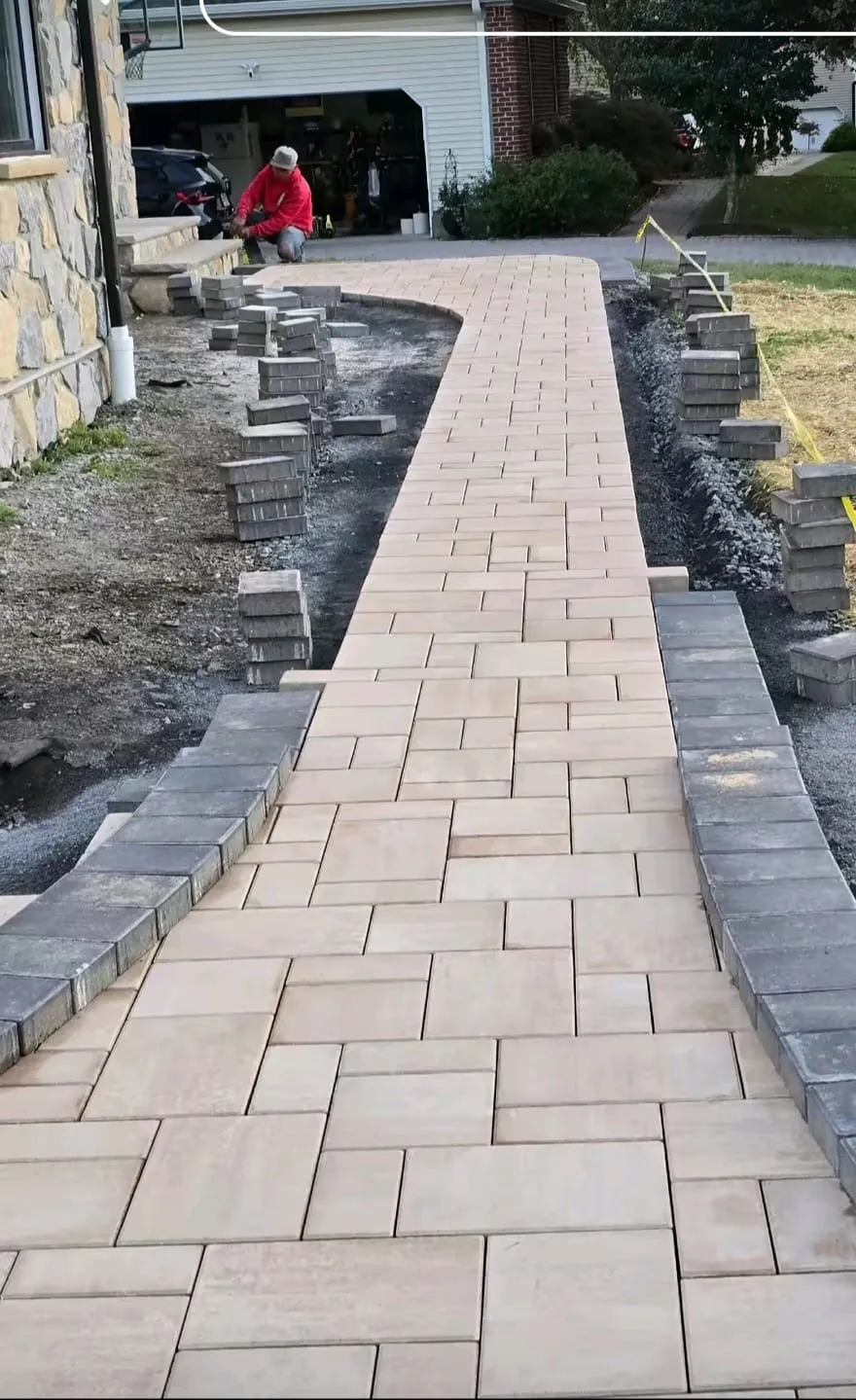
Under a properly built paver patio there’s excavated ground, then compacted stone, then a thin bedding layer, then the pavers. The stone base is what carries the load. If it was too thin, or dumped in one pass and rolled once instead of compacted in lifts, it keeps compacting under foot traffic and weather for years afterward.
A base compacted in lifts stops settling before the pavers ever go down.
The other common version is base that was never compacted over soft or disturbed ground, like a filled trench or the backfill next to a foundation. Those areas settle more than the ground around them, which is why the low spot so often sits right against the house.
02
Where the Water Gets In
Once a low spot exists, water collects there instead of running off. That water works down through the joints, softens the bedding layer, and washes fine material out from under the pavers. The dish gets deeper, more water collects, and the process feeds itself.
Do that thirty times a winter and the surface stops being flat. Downspouts that discharge onto or near a patio are a frequent culprit.
New Jersey winters speed this up considerably. Water sitting under a paver freezes, expands, lifts the paver slightly, and then the paver settles back into a slightly different position when it thaws. Gutters that overflow onto the same three feet of edge every storm are another frequent culprit.
03
Edge Restraint and Joint Sand
A paver patio holds together because every unit is locked against the ones beside it. Edge restraint along the perimeter is what keeps that field from spreading outward, and joint sand between the pavers is what transfers load from one unit to the next.
Edge Restraint
When it fails, outside courses drift out a fraction at a time.
Joint Sand
Empty joints mean every paver works alone. They sink alone.
Power Washing
Washes joint sand out. Refill after every wash or joints stay open.
When the restraint fails or was never installed, the outside courses drift out a fraction at a time, joints widen, and the whole field loosens. Loose pavers rock underfoot and let more water down into the bedding layer.
Joint sand also washes out over time, especially if the patio gets power washed without refilling the joints afterward.
04
Can a Sunken Section Be Reset?
Often, yes, and it’s a legitimate repair rather than a patch. The affected pavers come up, the base gets rebuilt and recompacted at the right depth, the bedding layer gets reset, and the pavers go back down. Done properly, that section is then better built than the rest of the patio.
Pavers come up intact and go back down after the base is rebuilt.
Where resetting doesn’t work is when the settling is widespread rather than local, or when the original base was thin across the whole field. In that case you’d be resetting one area every year while the next one drops.
Before any repair, figure out where the water is coming from. Fixing a downspout costs almost nothing compared to resetting the same corner three times.
A small amount in the first year is common as everything finds its final position. What isn’t normal is a section that keeps dropping, holds water after rain, or has pavers that rock when you step on them.
Can pavers be lifted and reused?+
Usually yes. Pavers come up intact and go back down after the base is rebuilt. That’s one of the real advantages over a poured slab, where fixing a settled section means breaking concrete.
Why does my patio hold water near the house?+
Either the pitch is wrong or the base settled over foundation backfill. Both are common. A paver patio in New Jersey should always pitch away from the house so water runs off instead of pooling against the wall.
Will polymeric sand stop the sinking?+
No. Joint sand keeps the field locked together and keeps weeds down, which helps, but it doesn’t address a base that’s still compacting underneath. It treats a symptom.
How deep should the base have been?+
For foot traffic the trade generally works to four to six inches of compacted stone, deeper where vehicles cross. What matters as much as depth is that it was compacted in lifts rather than all at once.
Free Estimate
Get your patio estimate in New Jersey
Send a photo of the low spot and we will tell you what we are looking at. Free estimates, no obligation.