Decision Guide

Should You Put Down Sod or Seed Your Lawn?

Cost, timing, and which one actually fits your situation — bare patches, a new build, or a full lawn redo. The real trade-offs.

JC Landscaping Crew · Updated August 2026 · 8 min read
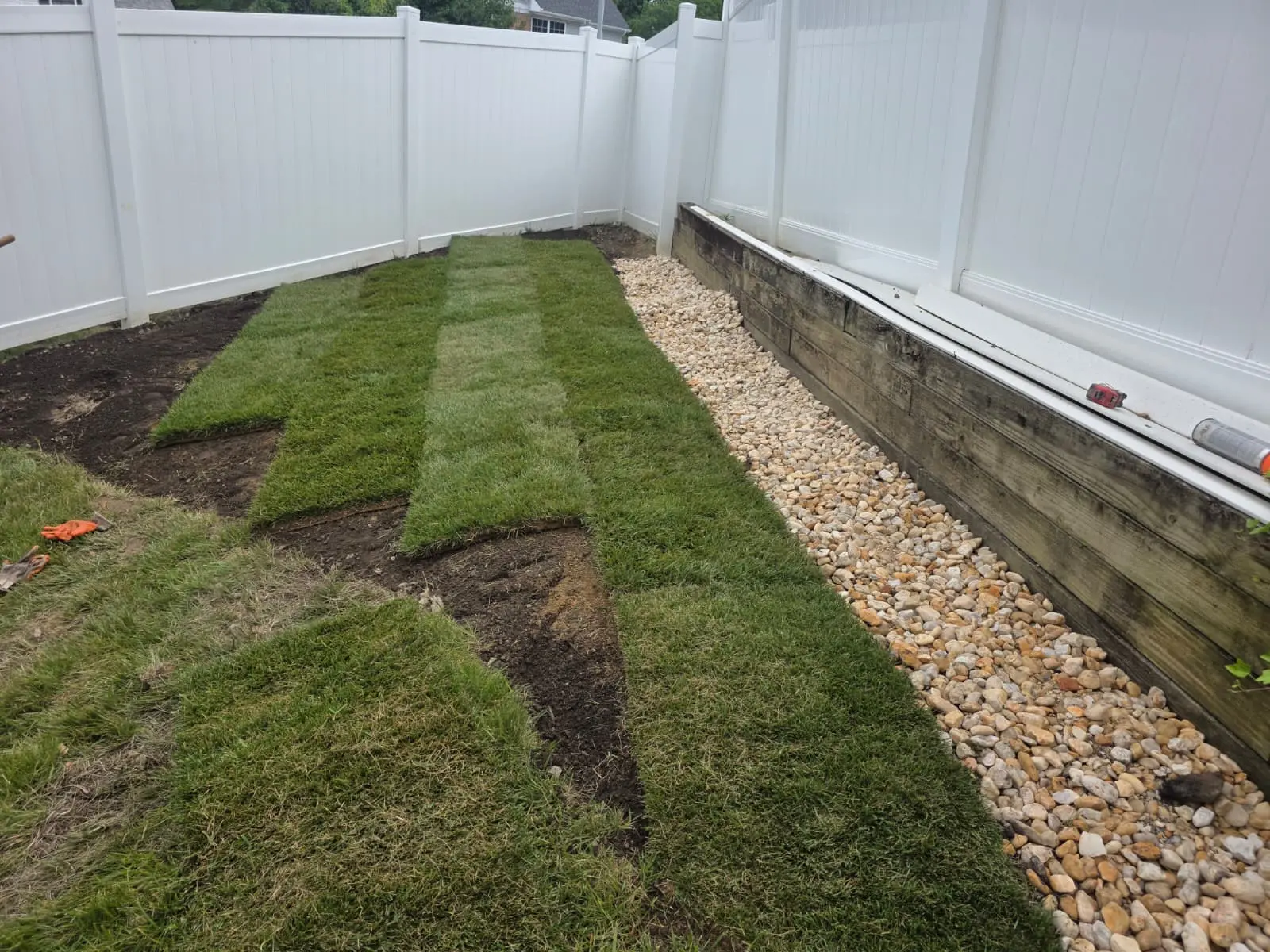
Sod installation on a prepared grade in New Jersey

The sod vs seed decision in New Jersey usually comes down to how much time you have and how much of the work you’re willing to do yourself. Both produce a lawn. Sod gives you one the same afternoon, and seed gives you one over a season if the weather cooperates and you stay on top of the watering.

Cost pushes people toward seed and results push people toward sod, which is why the argument never resolves. What actually resolves it is the specific situation. A bare patch under a swing set is a different problem from a new construction lot with no topsoil, and both are different from a lawn that’s thin because it sits under mature trees.

That last one, honestly, may not be a sod or seed question at all, and no amount of new grass will change it. Here’s how the two compare on the things that decide the outcome.

01

The Real Difference Is Time

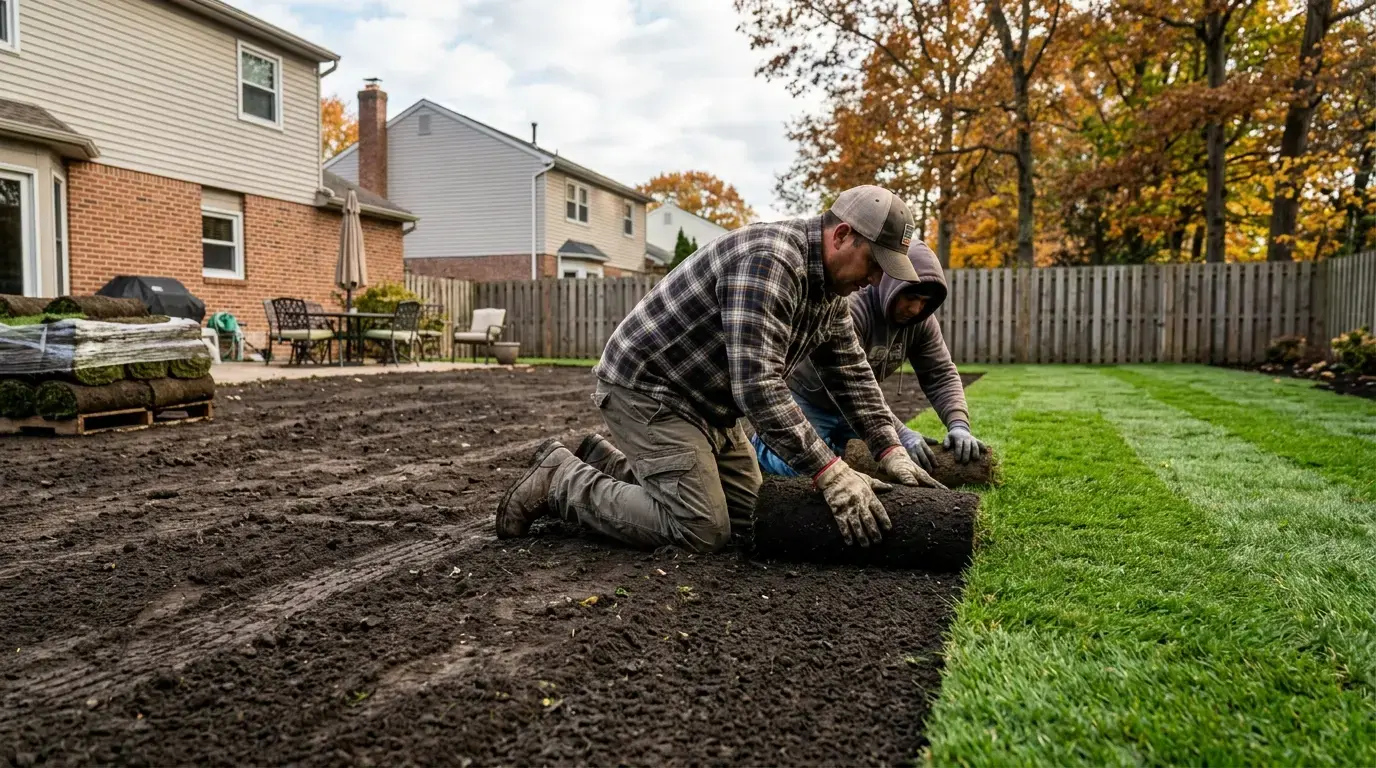
Sod is grass that was grown somewhere else, cut with an inch of soil attached, and rolled out on your prepared ground. You have a lawn immediately, and it’s usable in a few weeks once the roots knit into the soil below. Seed takes the same ground and asks you to grow the lawn in place.

Sod installation on a prepared grade in New Jersey
Fresh sod on a prepared grade — usable in a few weeks.

Germination takes one to three weeks depending on the type, and a seeded lawn needs a full season before it’s dense enough to handle real traffic. In between, it’s vulnerable to heat, heavy rain washing seed into low spots, and weeds moving in first. That waiting period is the actual product difference, and it’s why sod costs more.

02

Cost Over the First Year

Seed costs a fraction of sod per square foot for materials. That gap narrows once you account for what a seeded lawn needs to succeed, which is soil prep, a starter fertilizer, straw or a cover to hold seed in place, and often a second seeding in the fall to fill what didn’t take.

Sod includes almost none of that follow up. It also gets you immediate erosion control, which matters on any slope — where seed frequently washes away and you pay for the same square footage twice.

Sod costs more upfront and includes almost none of that follow up. It also gets you immediate erosion control, which matters on any slope. Neither works without ground prep. That’s the cost people leave out of both estimates.

03

Timing in New Jersey

Fall is the best window for both in New Jersey, roughly late August into October. Soil is still warm, air is cooling, and rain is more reliable, which is exactly what new grass wants. Spring is the second choice and works fine, though a seeded spring lawn spends its first summer competing with crabgrass and heat.

Fall (Aug–Oct)

Best window for both. Warm soil, cooling air, reliable rain.

Spring

Works. Seeded lawn fights crabgrass and heat all first summer.

Midsummer

Sod needs daily watering. Seed is mostly wasted money.

Sod can go down through the summer if you’re prepared to water it seriously, since fresh sod dries out in a day on a hot week and there’s no recovering it once it browns through. Seed in midsummer is mostly wasted money.

If you’re on a well, timing matters even more, because two weeks of consistent watering in August is a real demand on the supply.
04

Which One Fits Your Situation

Bare patches from traffic, pets, or a removed shrub are ideal for sod. They’re small, the difference is immediately visible, and matching the surrounding lawn is easy. New construction lots usually want sod too, because bare graded fill erodes in the first storm and seed goes with it.

Established sod lawn in New Jersey
New construction lots usually want sod — bare fill erodes in the first storm.

A full lawn renovation on a flat property with time to spare is where seed makes the most sense financially. And a lawn that’s thin under mature canopy is the case where neither answer is right.

If the grass keeps failing in the same shaded spot, more grass isn’t the fix, and a planting bed with shade tolerant groundcover will look better and cost less over time.

Frequently Asked

Common questions about sod and seed

Is sod better than seed?

It’s faster and more reliable, not inherently better grass. Sod gives you a usable lawn immediately and handles slopes where seed washes away. Seed costs less and works well on flat ground with a full season to establish.

When can you walk on new sod?

Keep traffic light for the first two to three weeks while the roots knit in. Pulling gently at a corner tells you when it’s rooted, because it should resist rather than lift.

How much watering does new sod need?

Consistently, for the first two weeks, and the top layer shouldn’t be allowed to dry out. This is the step people skip, and it’s the most common reason new sod fails in a New Jersey July.

Can sod be installed over an existing lawn?

No. It needs contact with prepared soil to root. The old turf comes off, the ground gets graded and loosened, and then the sod goes down on top of that.

What’s the best time for sod installation in New Jersey?

Fall first, spring second. Summer installs work if the watering is genuinely committed to, since fast draining ground and hot weather can dry new sod out in a single day.

Free Estimate

Get your lawn estimate in New Jersey

We handle sod installation, grading, and weekly lawn maintenance. Free estimates with no obligation.

Licensed & Insured 1-Year Warranty Statewide NJ