Pavers or a Poured Concrete Patio: Which Should You Build?
How each handles freeze and thaw, what repairs cost you later, and which one fits your property and your timeline — honestly.
JC Landscaping Crew
·
Updated August 2026
·
8 min read
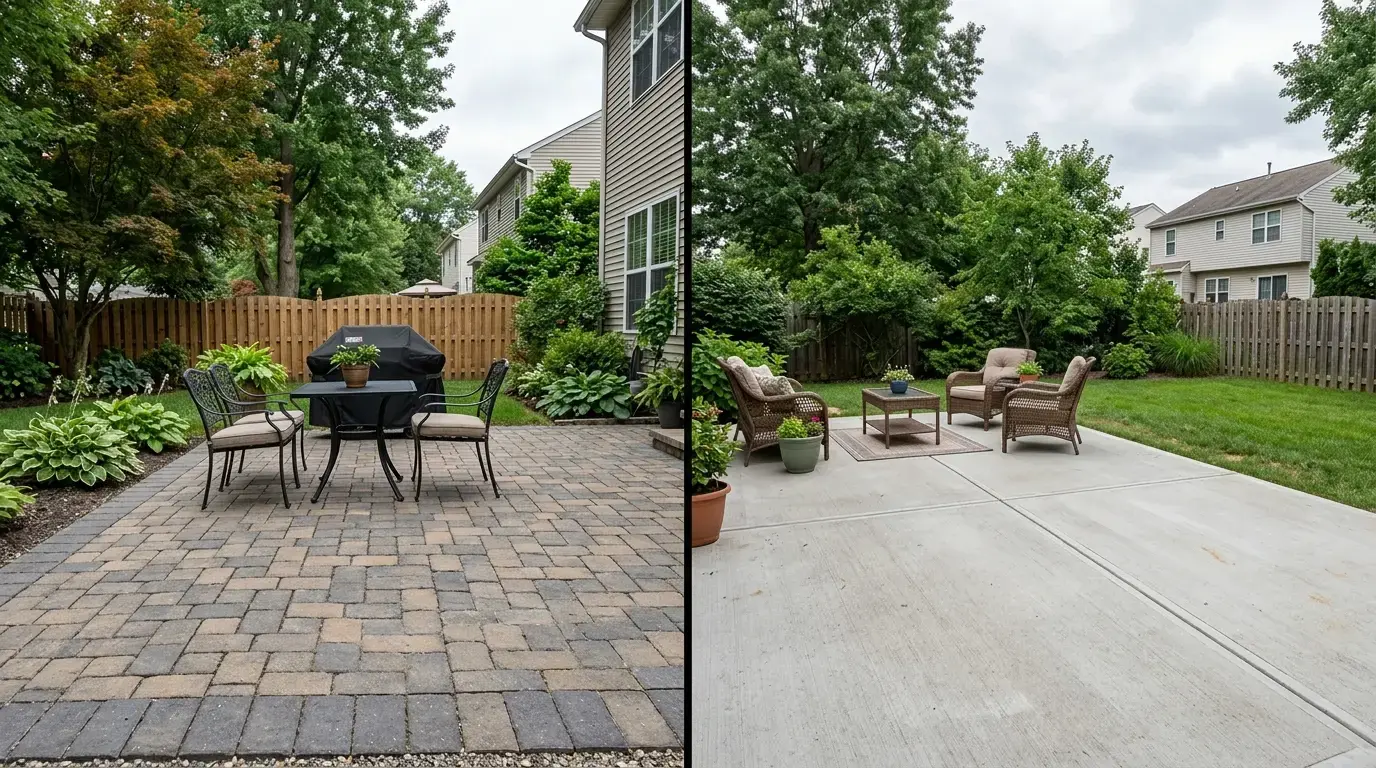
The pavers vs concrete patio question in New Jersey has a different answer here than it would in a state that doesn’t freeze. Both surfaces are made of concrete. The difference is that one is a single continuous slab and the other is hundreds of small units with sand between them, and that structural distinction is what determines how each one behaves after ten winters.
Poured concrete is usually cheaper up front and it’s a clean, simple surface. Pavers cost more to install and give you something that moves with the ground instead of against it. Neither is the right answer for everyone, and anyone who tells you otherwise is selling one of them.
Budget, how long you plan to stay in the house, and what the patio connects to all pull the decision in different directions. Here’s how the two actually compare on the things that matter after the first season.
01
How Each Handles Freeze and Thaw
Ground in New Jersey moves every winter. Water in the soil freezes, expands, lifts whatever sits on it, and lets it back down when it thaws. A poured slab is rigid, so when the ground under one corner lifts and the rest doesn’t, the slab has to either move as a unit or crack. Usually it cracks.
Paver joints absorb ground movement. A rigid slab has to either move as a unit or crack.
Control joints are cut in to influence where that happens, which manages the problem rather than preventing it. A paver field handles the same movement differently. Individual units shift fractionally against each other and the joint sand absorbs it. The surface can develop small irregularities over years, but it doesn’t fracture, because there’s nothing continuous to fracture.
02
Repairs Are Where They Diverge
This is the practical difference most homeowners feel eventually. When a section of paver patio settles, the affected pavers come up, the base gets rebuilt, and the same pavers go back down. The repair is invisible when it’s finished.
When a poured slab cracks or settles, your options are patching it — which always shows — or repouring, which means a new section that won’t match the color or the finish of the old one.
Utility work runs the same way. If a line has to be reached under a paver patio, the units come up and go back. Under a slab, it comes out with a saw and a hammer.
03
Cost Up Front and Cost Over Time
Poured concrete generally costs less to install than pavers for the same square footage. That gap is real and it’s the reason a lot of patios get poured. Where the comparison shifts is over the life of the surface.
Concrete Up Front
Cheaper install. Real gap. Why a lot of patios get poured.
Pavers Over Time
Repairs invisible. Reusable if you extend or relayout.
The Long Game
Slab cracks in year 8 = replacement. Pavers = repair.
A slab that cracks in year eight is a cosmetic problem you live with or an expensive replacement. A paver patio that settles in year eight is a repair. Pavers also come up and get reused if you ever change the layout, extend the patio, or add a wall, which a slab does not.
If you’re planning to sell in a few years, the up front number matters more. If this is the house you’re staying in, the second number does.
04
Which One Fits Your Property
Both need the same thing underneath, and that’s where most patios of either type actually fail. Excavation, compacted stone base, and drainage matter more than the surface material. A poured slab on a proper base outlasts pavers on a bad one.
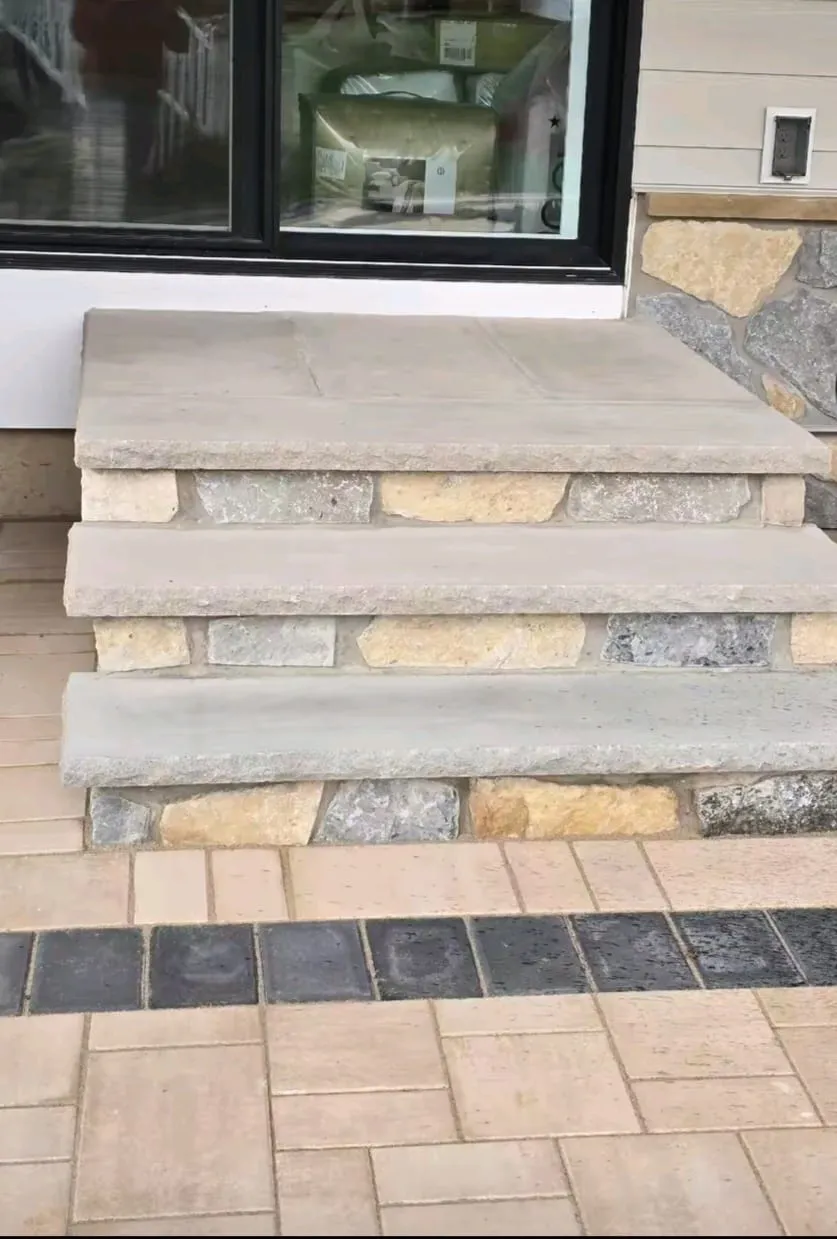
Pavers where the shape is complex or ties into steps or a wall.
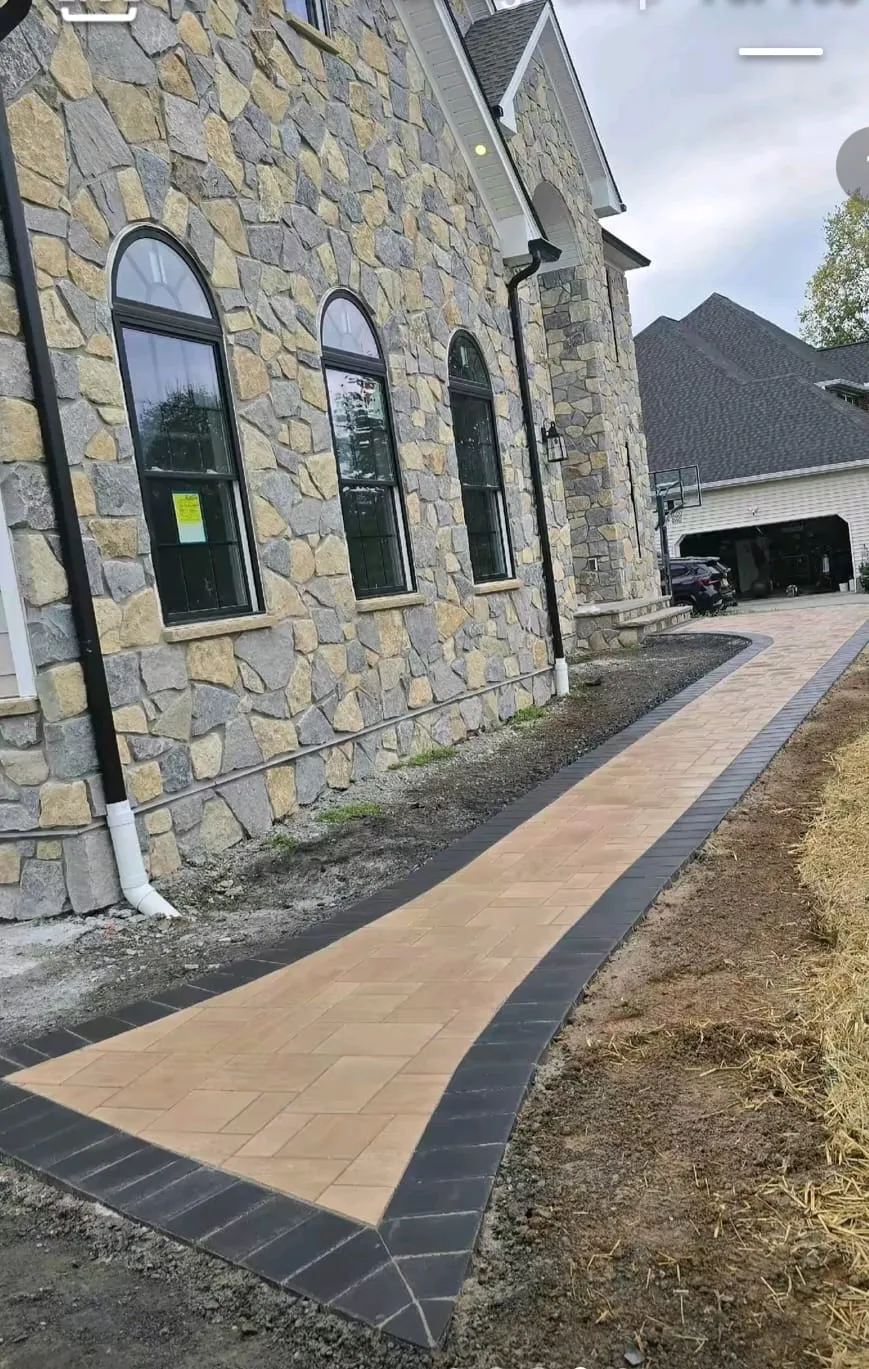
Concrete makes sense for large simple areas, utility spaces, and budgets where the difference decides whether the project happens at all. Pavers make sense where the shape is complex, where the patio ties into steps or a wall, where you want the option to repair rather than replace, and where the finished look is doing work that a gray slab won’t do.
Ask any contractor what base they’re building, whichever surface you choose. The base is where most patios actually fail, not the surface.
To install, generally yes. Over the life of the patio the comparison narrows, because paver repairs are localized and invisible while concrete repairs either show or mean replacing a whole section.
Do pavers crack in the winter?+
Individual pavers rarely crack, because the field flexes at the joints instead of fracturing as a unit. What can happen over years is small unevenness, which is a resettable problem rather than a permanent one.
Can I put pavers over an existing concrete slab?+
It’s done, but we don’t recommend it. If the slab cracked and settled once it will move again, and everything laid on top moves with it. Removing it and building a proper base costs more now and less later.
Which is better for a New Jersey driveway?+
Both work if the base is built for vehicle loads, which is considerably deeper than a patio base. The repair advantage of pavers matters more on a driveway, since that surface takes the most abuse.
Does either one need sealing?+
Neither requires it. Sealing pavers changes the appearance and can help with stains, and it goes on clean, dry pavers only. Concrete sealers exist for similar reasons. It’s optional on both.
Free Estimate
Get your patio estimate in New Jersey
Tell us the space and the budget and we will price the honest option. Free estimates, no obligation.